


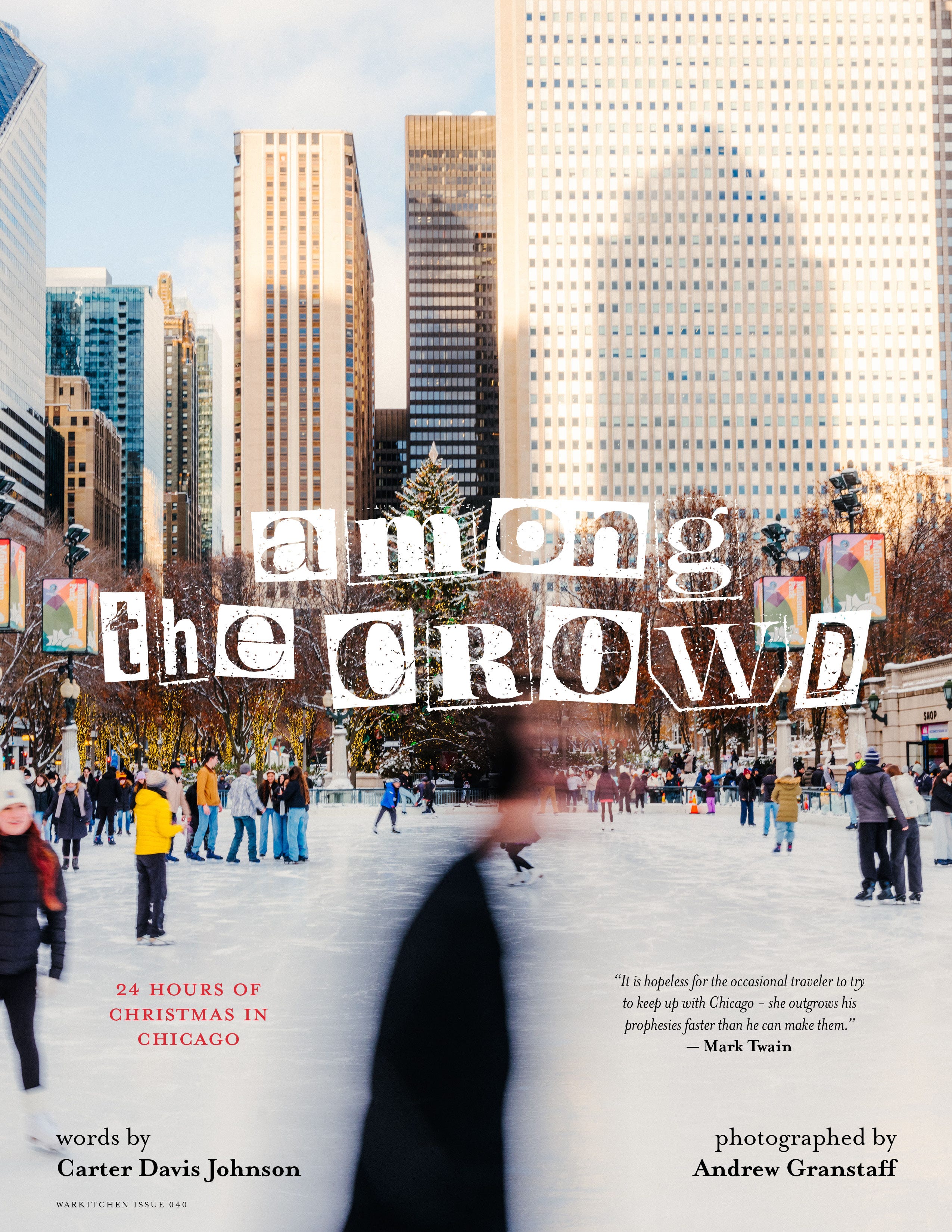
It was already dark although not late when we saw Chicago appear on the horizon, glimmering through the fog and the spitting snow. After long stretches of rural Indiana, the city felt like a cold plunge into a big river. We were suddenly engulfed in lights and movement. The sky itself, an endless canopy an hour ago, now appeared in flashes between steel and stone. My little black truck slipped into the traffic and was carried down the surging tributary toward downtown.
Andy and I were in Chicago to attempt the impossible. We were trying to capture the atmosphere of Christmas in the Windy City. Our goal was quixotic at best. There was simply too much, all the time, everywhere. Even over a century ago, Chicago defied adequate description; Mark Twain predicted our failure: “It is hopeless for the occasional traveler to try to keep up with Chicago - she outgrows his prophesies faster than he can make them. She is always a novelty; for she is never the Chicago you saw when you passed through the last time.”
If a nineteenth-century “occasional traveler” had a “hopeless” task, our goal was preposterous. We had 24 hours. It was a blitz trip. That said, we had no intention of - as Twain remarked - “keeping up.” We were ready to happily fail, to be swept up in the current.
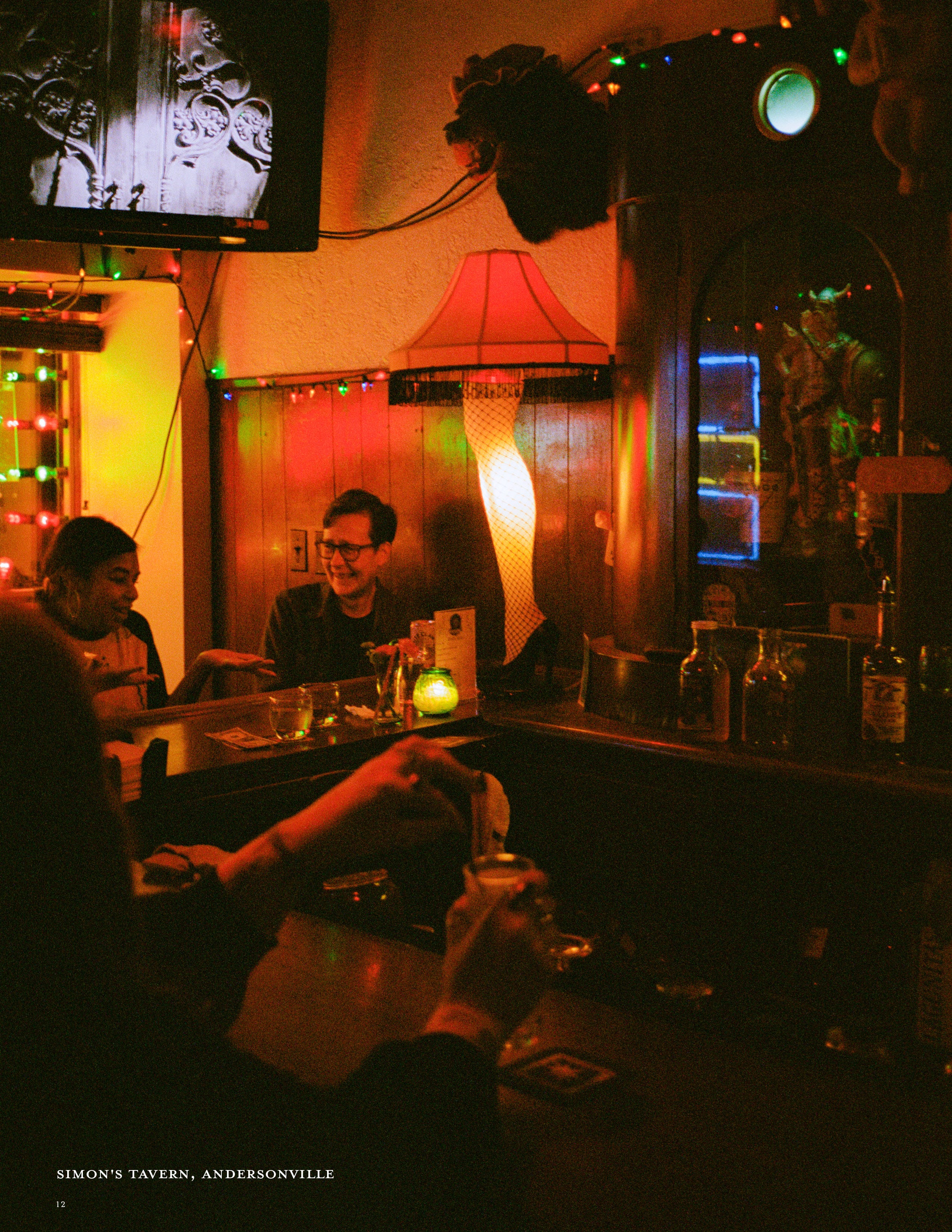
Our Chicago Christmas began at a historic bar in Andersonville, Simon’s Tavern, which has been a neighborhood institution for nearly a century. We crossed the street, guided by the partially-lit neon, and ducked out of the cold and through the original door. The narrow bar was packed with people, shuffling shoulder-to-shoulder under decorative candy canes hung from the low ceiling. Our first order of business was to try Simon’s famous glögg, a traditional Nordic Christmas drink, prepared by the bar’s owner Scott. Although recipes vary from family to family, Simon’s glögg is a mixture of port wine and brandy cooked with cloves, cinnamon, cardamom, and orange. Scott also includes two “mystery ingredients” - because what’s a family recipe without a secret?

The glögg opens with a warm spice, not dissimilar to a chai tea, then finishes with a sharp fruity echo of alcohol. It’s just the thing you need to knock the chill from your bones as you thaw out under the dim lighting. Scott showed us the caldron he uses to prepare thousands of gallons of glögg. We tried to keep up with his rapid conversation as he stroked his long white Fu Manchu like some Midwestern Viking. After we said goodbye to Simon’s, we returned to the snow-covered streets. It crunched softly under our boots. I turned up my collar and braced against the snow, giving my best James Dean impersonation. It was late.
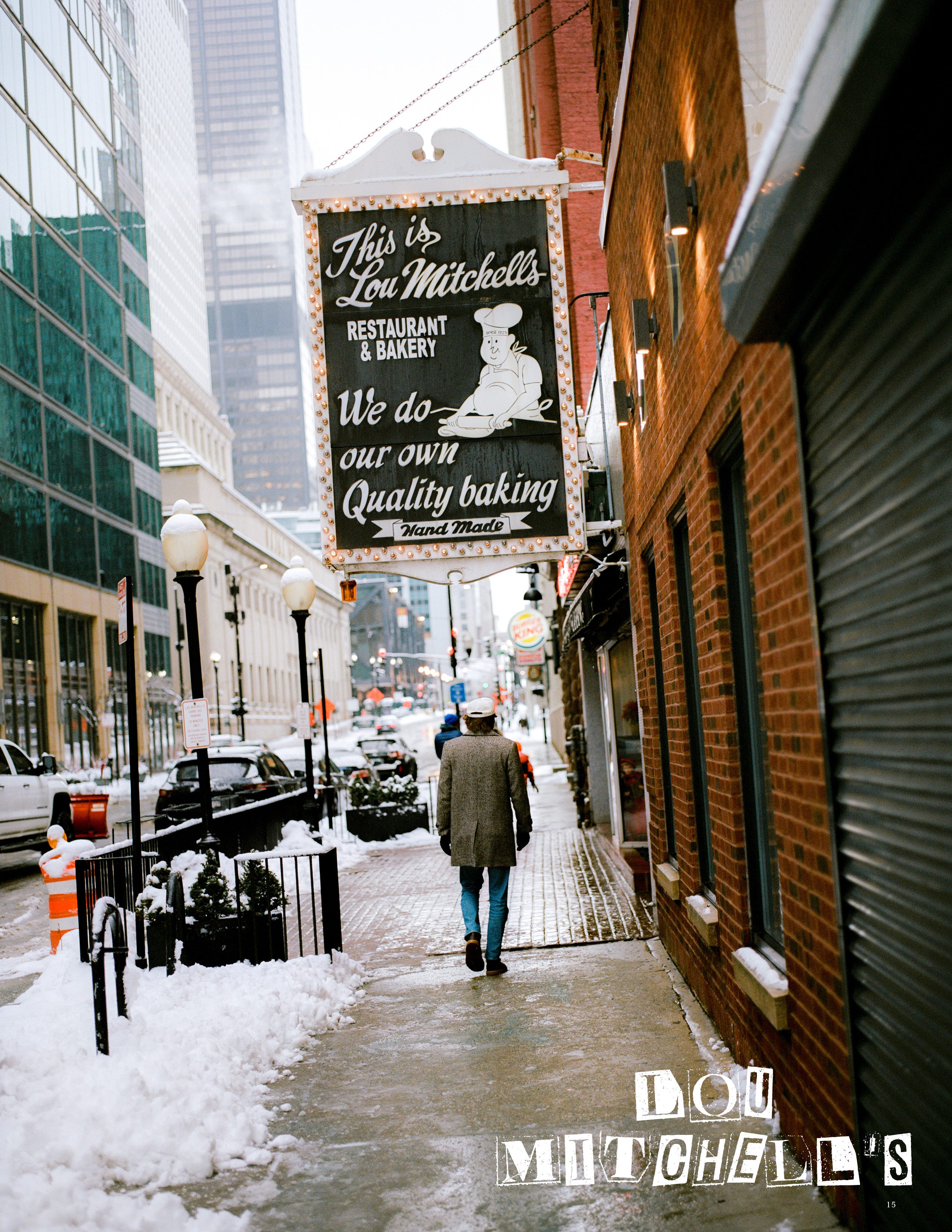
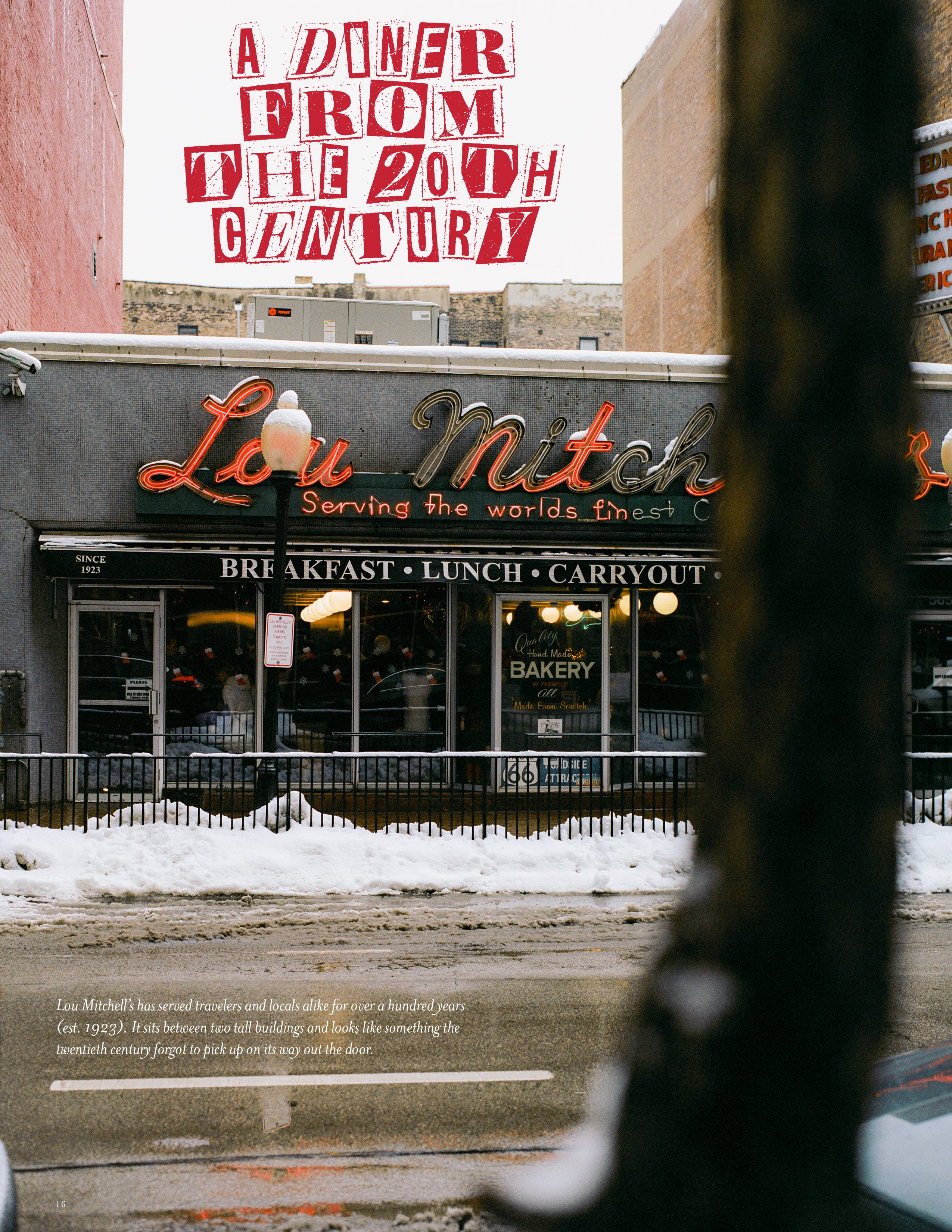
In the morning, we parked the truck in an underground lot and walked to Lou Mitchell’s, a greasy-spoon diner around the corner from Union Station. Located at the original starting point of Route 66, Lou Mitchell’s has served travelers and locals alike for over a hundred years (est. 1923). It sits between two tall buildings and looks like something the twentieth century forgot to pick up on its way out the door. It has all the characteristics of a great American diner: snappy service, friendly staff, perfectly shaped coffee mugs, and the warm chatter of conversation. We received, per Lou Mitchell’s tradition, a slice of orange and a donut hole with our coffee (which was - according to their neon sign - the “finest in the world”). I ate a huge Greek-sausage omelet with feta cheese, served in a frying pan, and Andy had some bacon with a stack of pancakes that could have insulated a house. We roused ourselves with final gulps of coffee and slipped past a group of people waiting for a table.

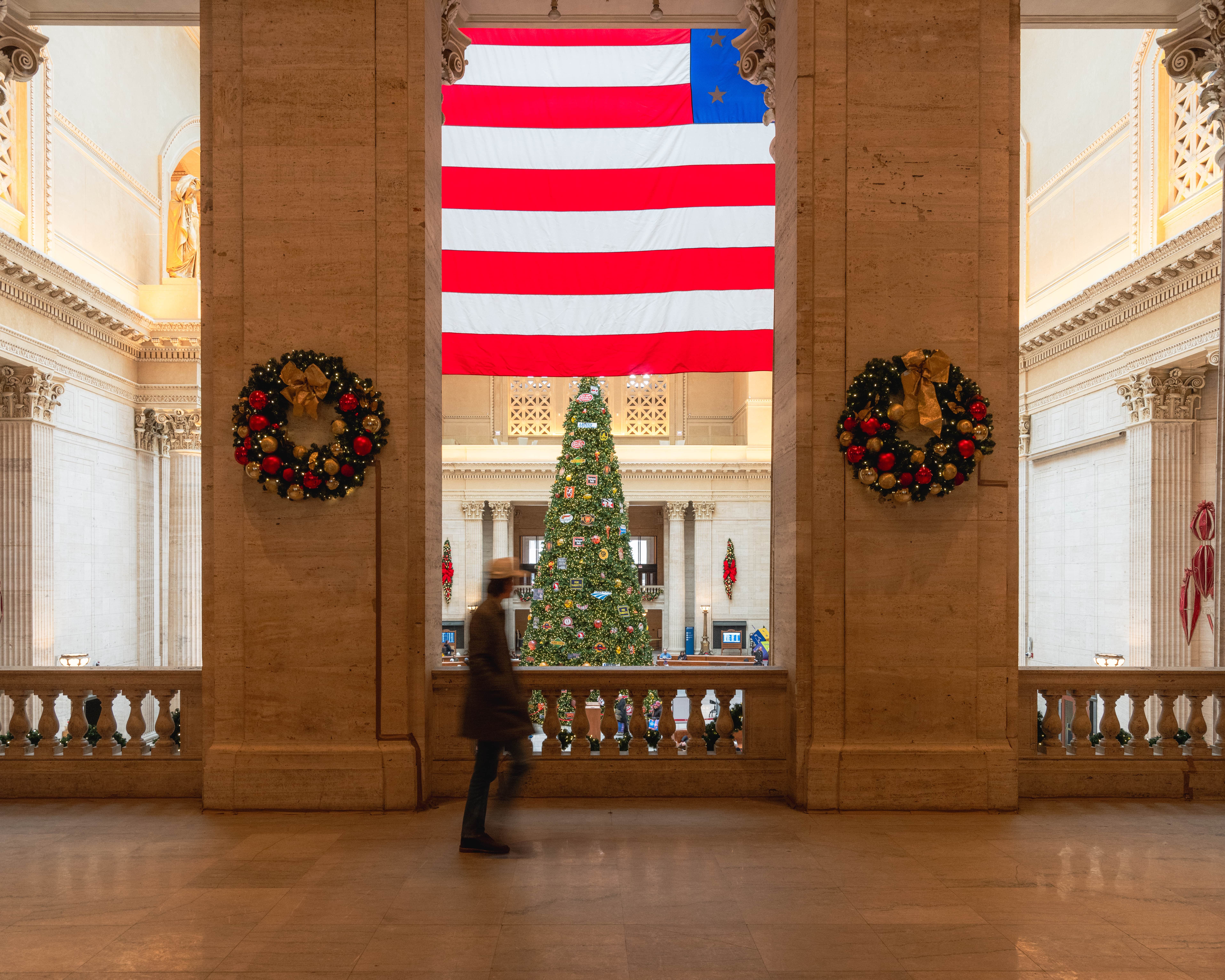
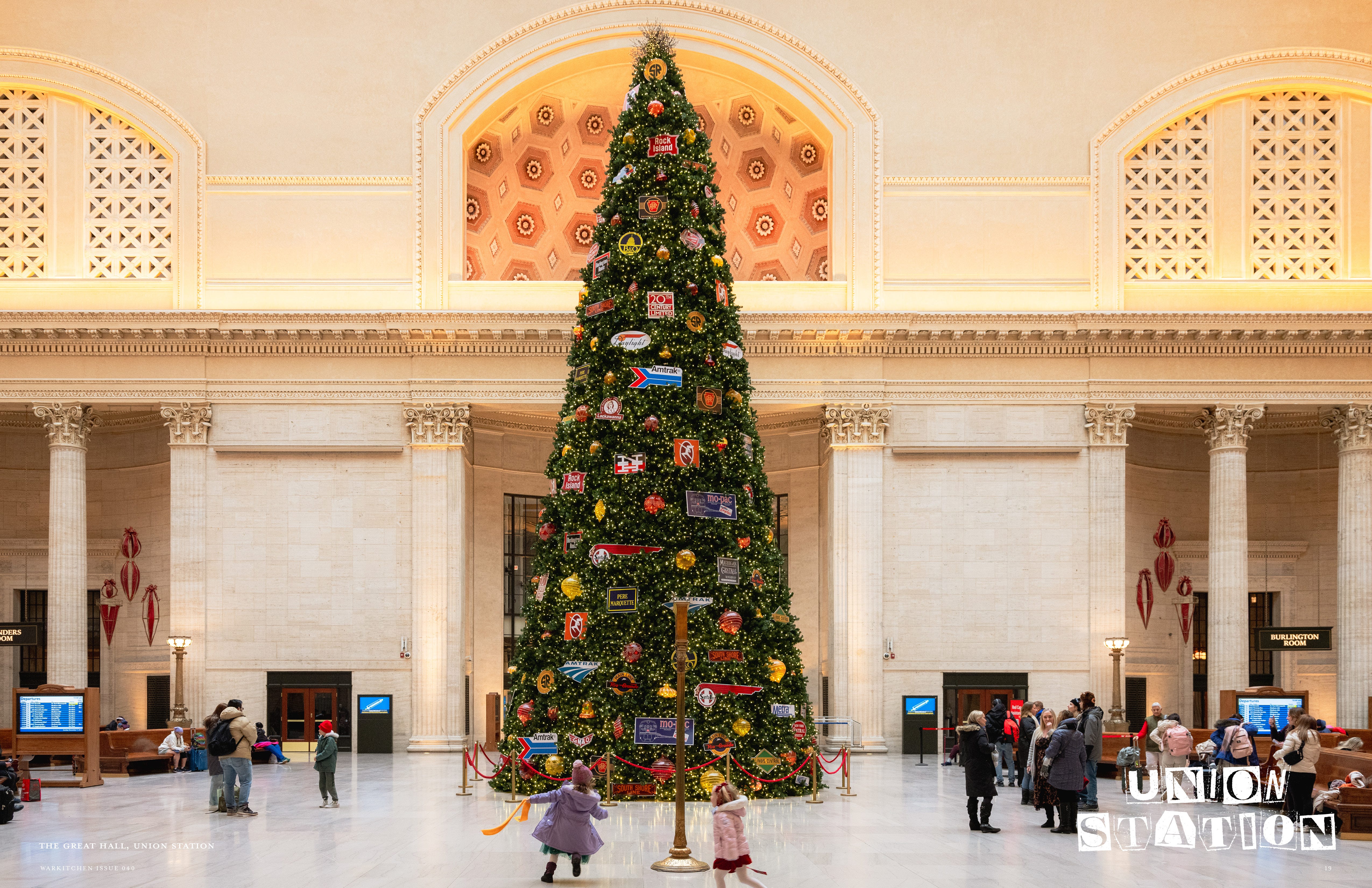
It wasn’t on our itinerary, but we walked into Union Station. I’m drawn to neo-classical and beaux-arts architecture like a moth to a flame, so there was little chance we were leaving the area without going inside. Union Station feels almost impossible. The marble floors, Corinthian columns, and vaunted floral reliefs are arresting. In the middle of the Great Hall, there was a massive Christmas tree, glittering with Amtrak ornaments and beaming with cheerfulness. It looked completely at home, matching the grandeur and scale of its environment. You almost felt like you were trespassing in some unfamiliar and enchanting place, as if a family of giants, drinking huge goblets of glögg, might come home at any point and clear out the room for Christmas dinner. Children played underneath the tree while other travelers snapped photos and an elderly worker announced a train, his voice vanishing into the room like someone calling from far away. This was my favorite stop of our trip. Sitting on the long wooden benches, we were all fellow travelers. Each story intersected momentarily in this beautiful space, watched over by Henry Hering’s sculpted ladies, Day and Night, perched on their columns like his other famous “Guardians” that watch over Cleveland traffic.
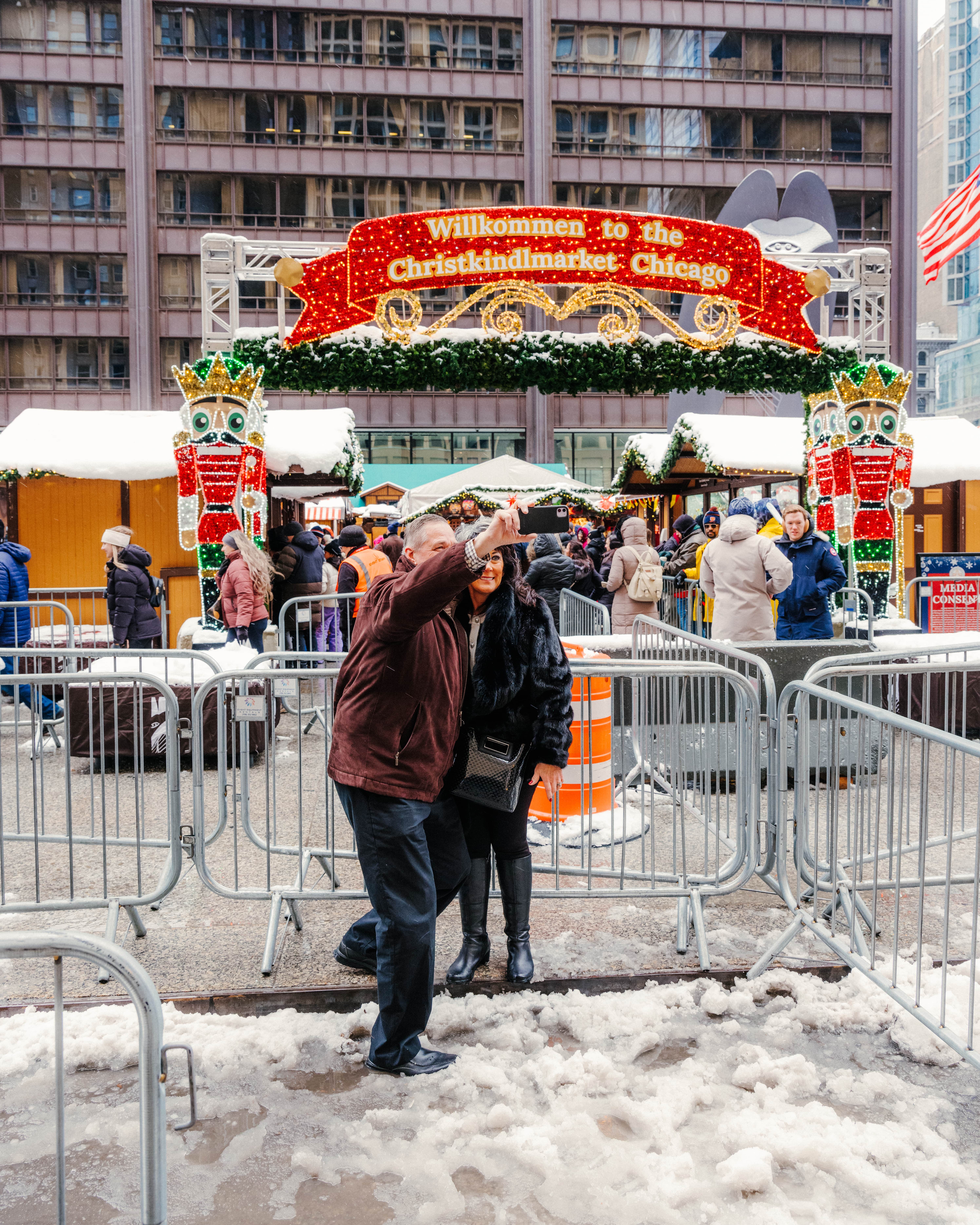
After stopping by Sawada coffee for a late morning jolt, we made a quick drive to the Christkindlmarket, an outdoor German-style market on the corner of Washington and North Dearborn. It sits under the fox-like face of Picasso’s sculpture. The market was awash with people, sipping hot chocolate and ordering bratwursts and perusing the stalls. Among the sundry of goods (decorative steins, ornate wooden clocks, knickknacks, etc.), there were thousands of glass ornaments. People churned in and out of the few covered tents. The market made a loop, and as we walked, the sights began to blend with a colorful assortment of smells: honey roasted nuts, golden strudel, dark beer, and spiced cologne from a passerby. It was busy, but there was a real sense of comradery. It wasn’t a Black Friday stampede. Instead, it was friendly saunter. You were free to wander toward whatever caught your eye. You didn’t feel as if the crowd was something to deal with; rather, it was something to be a part of, alongside, together with.


Perhaps that’s the great advantage of Christmas in Chicago. There is a real sense of being caught up in something bigger than yourself. It would require a megalomaniacal ego to imagine that the city somehow bends itself toward a single person. No. The city invites us to forget ourselves for a while, to fall into the crowd. And by shuffling off our often obsessive self-consciousness, we can find a type of individual expression, an expression that can be made alongside others. This togetherness is central to the holiday season. You might, for example, overhear or sing the well-beloved carol, O Come, O Come Emmanuel. This adopted Hebrew word, Emmanuel, translates as “God with us,” celebrating the Christian tradition of Jesus’ birth: the divine coming alongside, dropping into the crowd Himself.
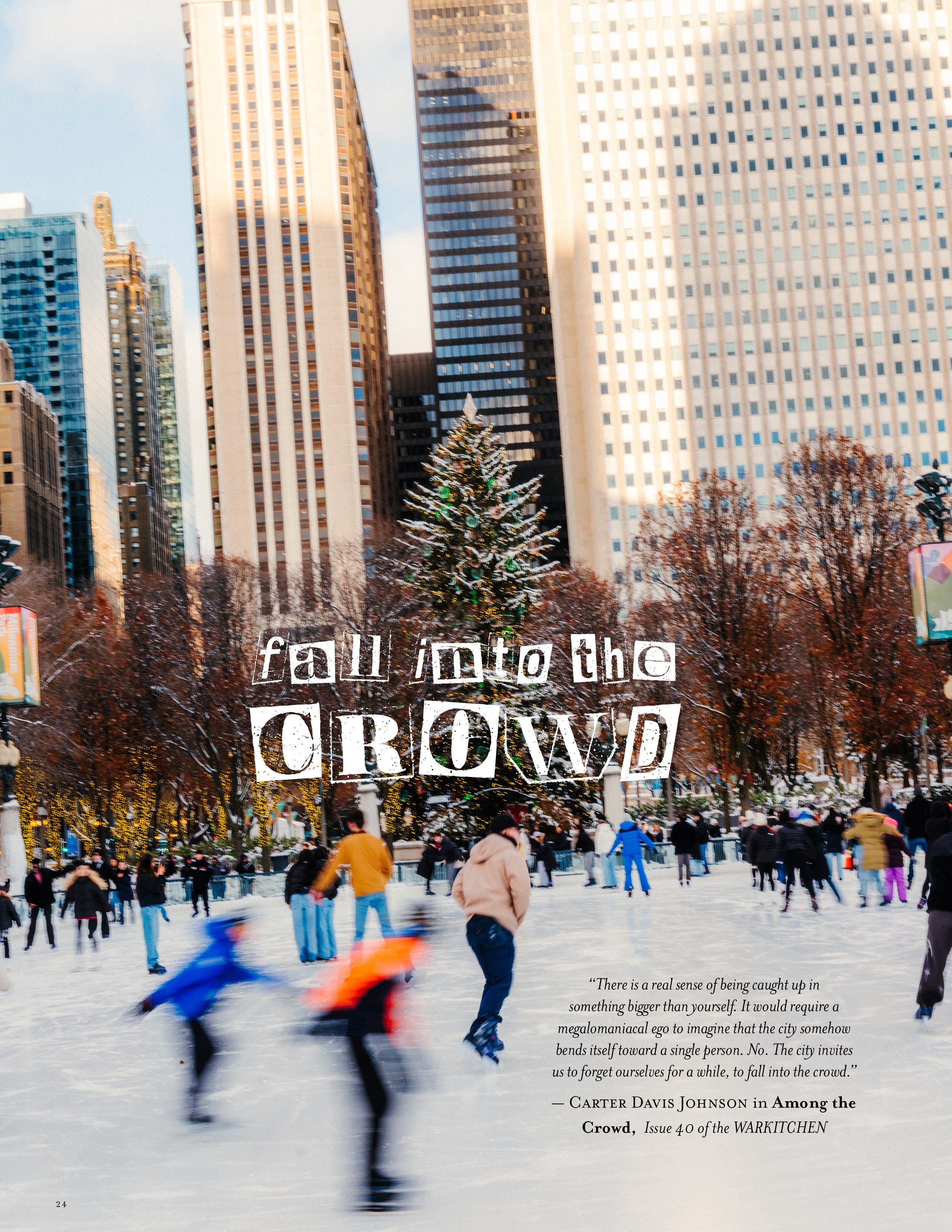
“Above the rink, happy faces watched the show and little clusters of people mailled around the scintillating landmark, covered with patches of snow, basking like a cat in the sun. We walked against the wind and reached the Chicago River and crossed DuSable Bridge.”
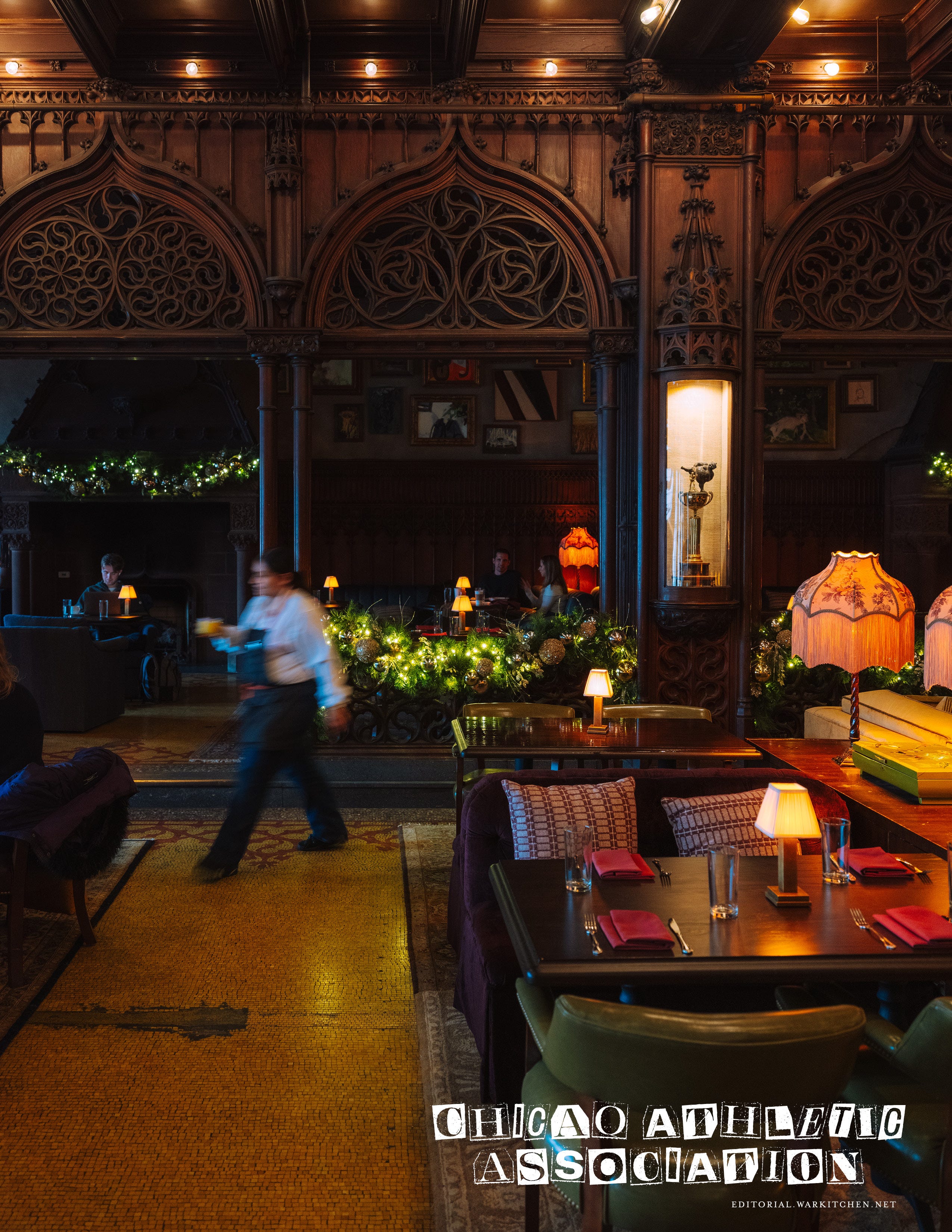
Hurtling through the bluster toward Millennium Park, Andy and I dropped into the Chicago Athletic Association Building for an afternoon reprieve. We went upstairs to the Drawing Room, one of my favorite spots in Chicago. I’d visited years before, and it was as fantastic as I remembered. Dark. Cozy. Ornate. We were sat beside a large hearth and ordered two cups of coffee. Suddenly, it was very quiet. The small group of people around us felt secluded from the thousands that moved outside. It was as if we were tucked away from the entire world. We played chess, and Andy - per our usual arrangement - dismantled my optimistic openings. After two decisive defeats, I figured my hopes were better in the snow and we bundled up and went across the street to watch the ice skating at the edge of the park.
The sun finally emerged from a blanket of grey, giving the rumor of warmth across our necks. Below Cloud Gate (or more popularly “The Bean”), skaters turned circles around the rink, some with deft fluidity and some with the grace of a newborn animal, frightened and sprawling. Above the rink, happy faces watched the show and little clusters of people milled around the scintillating landmark, covered with patches of snow, basking like a cat in the sun. We walked against the wind and reached the Chicago River and crossed DuSable Bridge. The reliefs carved on the bridgehouses had snow along their edges. The folds of the angel’s tunic were white and the barrel of John Kinzie’s musket was like an icy stalagmite. We were rebuffed, however, at the beginning of the Miraculous Mile. The distance between us and truck was getting precariously longer and the stack of pancakes in Andy’s stomach were fading with the light.
After a friendly man with a shovel helped us unlodge the back wheels of my truck, we collapsed in Au Chavel, which serves - according to some - one of the best burgers in Chicago. We slunk into seats at the bar and ate in silence. The burger was Platonic: two patties, onions, pickles, dijonnaise, unassuming Kraft cheese, and a brioche bun. There were no tricks. Just a great burger. I tried to eat slowly but failed. We walked back in the dark, cold slush.
After 24 hours, we left town much as we arrived, a small drop in a rushing torrent of traffic. Andy had completely lost his voice from a combination of a head cold and the weather and no sleep (and perhaps glögg, but Scott claimed it was a remedy for a cold; I think the FDA is looking into it). He made some signs to me and quietly edited photos. I fell into the rhythm of the highway. I started to finally feel warm. The windmills blinked sporadically in the darkness like castaways signaling for help. Behind us, Chicago rumbled on in our absence, but it’s imagined presence was still with us, carrying us closer toward the world.
Carter Davis Johnson and Andrew Granstaff publish Lost Swan, where they document real people doing real things in real places. They describe their work as a blend of creative non-fiction and photography. Explore more of their work and subscribe here.
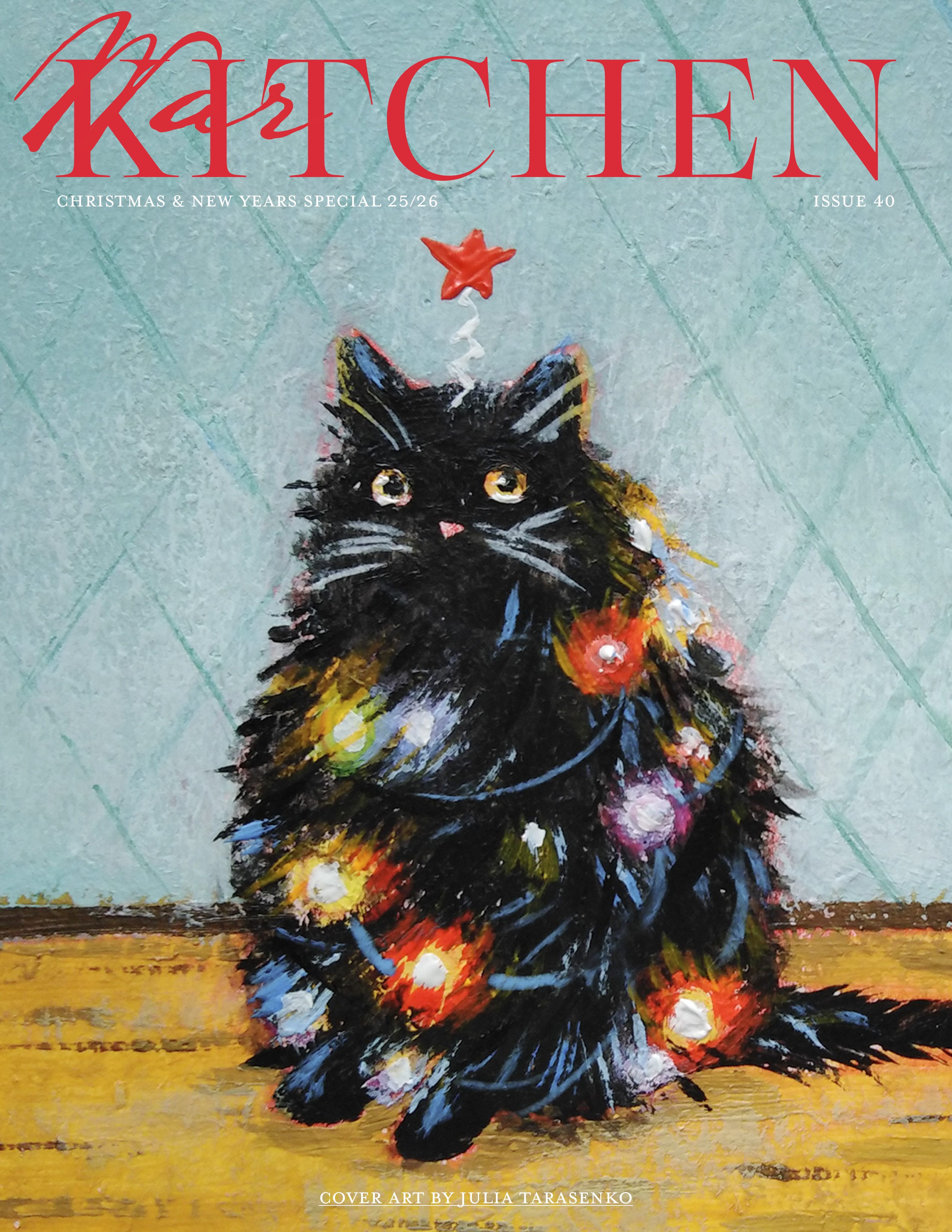
This piece has been published in Issue 40 of the WARKITCHEN, a Christmas special. Explore the full WARKITCHEN archive here. Enjoy the experience 🥂


It's true; I first came to Chicago in January 2015. In just over a decade it is indeed a different Chicago than the one I first knew.