



You can tell a lot about someone from the type of coffee they order. A frappuccino regular is a very different person from someone who only drinks a refined dark roast espresso.
Coffee reveals who you are (yes, it’s actually that deep). The cup, the method, the time of day, the temperature you take it at. Every choice says something, whether you realize it or not. And these days, everyone has a take. Our last coffee tier list was certainly controversial, and some of you complained that it wasn’t quite authentic enough.
So we decided to get some help. And who better than our friends at Graffeo Coffee, San Francisco's oldest independent coffee roaster, for not just a tier list but 25 Maxims for Coffee from Luciano Repetto himself, who has been roasting coffee for decades.
Before we show you the different tiers, here are a few words from Luciano, Graffeo Coffee’s legendary operator, when asked what’s the best coffee:
“The best method is the method that gives you the satisfaction that you want. So if you enjoy the taste of drip coffee, it should be drip for you. The best method is what you enjoy. There is no single answer. It’s what makes you enjoy the pleasure of tasting a great cup of coffee.” — by Luciano Repetto of Graffeo. Simply the World’s Finest Coffee.
Reminder, this is all done in good fun and based on collective opinion!
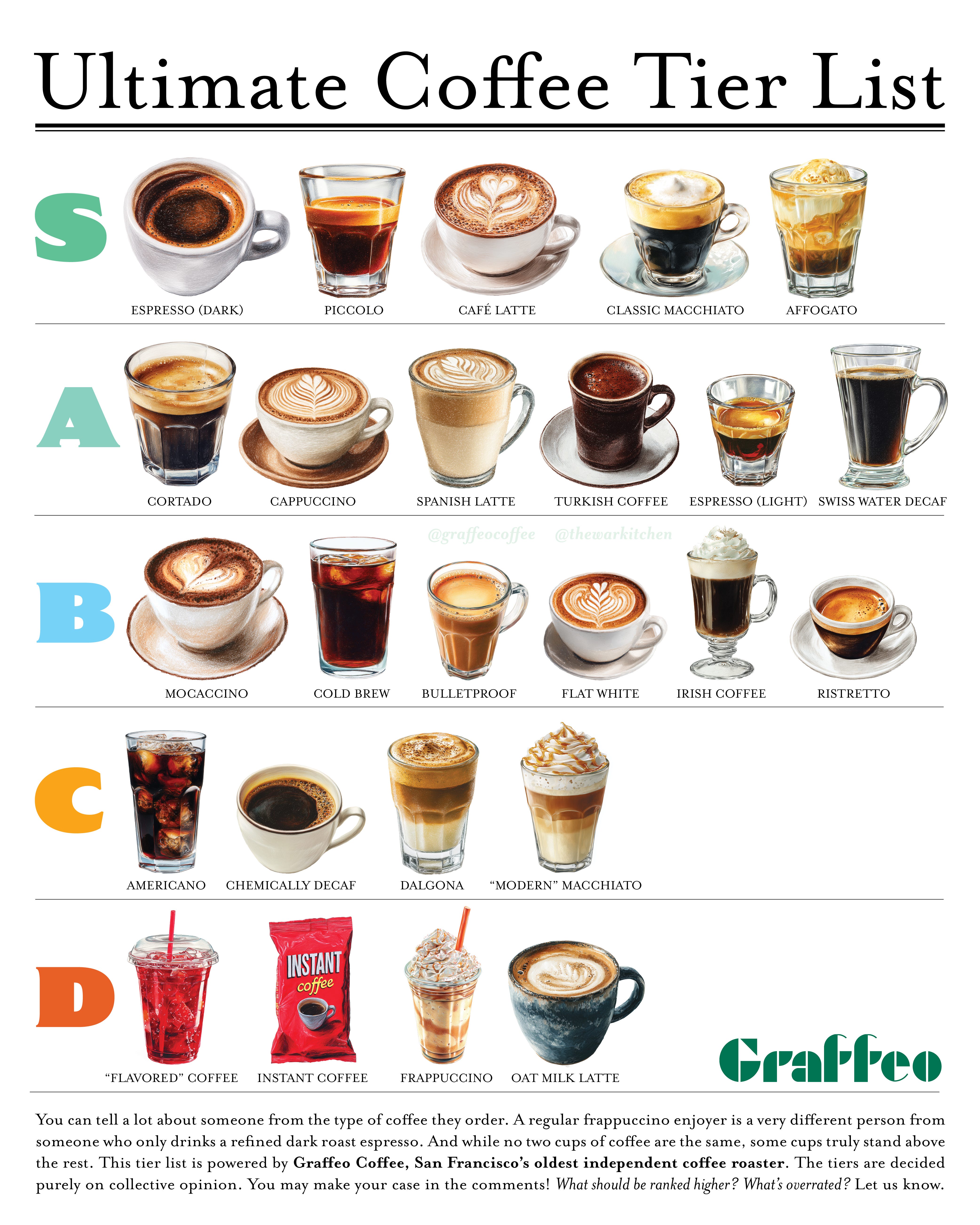
What’s your favorite coffee? Let us know what makes S tier for you in the comments below.
And of course, a tier list can only say so much. Luciano has spent decades thinking about coffee in ways that don't fit neatly into S, A, B, C, D. So here are his 25 maxims for coffee. Some you’ll agree with completely. Others will sting. But they’re all worth reading, especially if coffee is something you genuinely love.
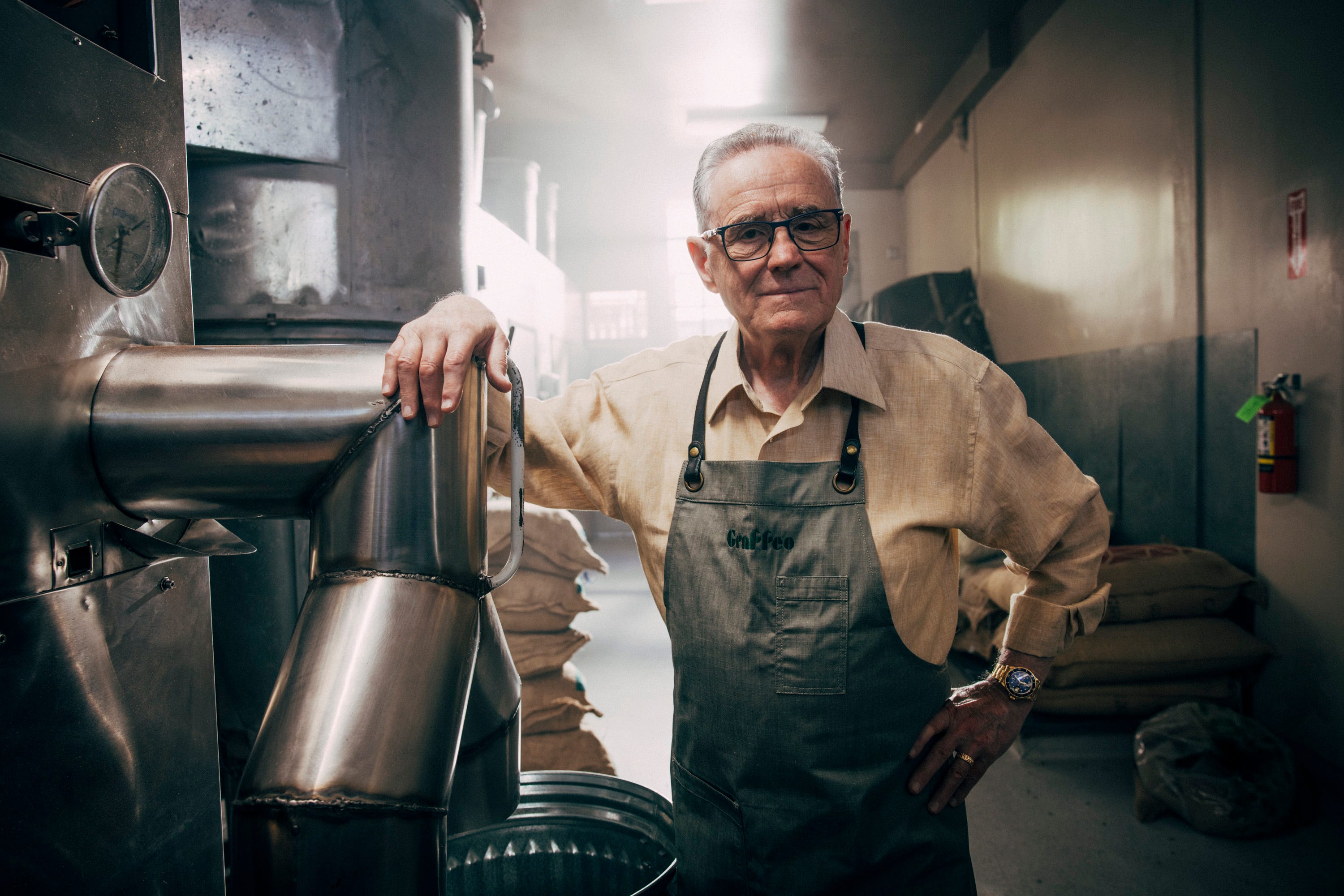
Luciano’s 25 Maxims for Coffee:
Drinking cappuccinos in the afternoon is a mortal sin. It’s sacrilege. After 10 o’clock in the morning, cappuccino is a no-no.
The perfect roast is best described as “no bitterness.” Bitterness is completely objectionable and not what coffee is about.
Espresso means rapid in Italian. It’s supposed to be a quick way to make coffee. Yet with all these new coffee trends and “coffee nerds,” it’s taking them ten minutes to make one cup of coffee. That’s the slowest espresso I’ve ever seen.
The right water temperature for brewing coffee is below boiling. Water boils at 212°F. 185-190°F is perfect.
Single origin doesn’t mean it’s always better. In fact, blends allow you the opportunity for continuity with the flavor profile you’re building. With any agricultural product, flavor profile varies so when you use a single origin the flavor profile changes.
Fluid bed roasting allows you to roast coffee via convection, not conduction, which largely reduces the likelihood of charred beans.
Quality absolutely matters. You have to buy the absolute best product available on the market. There’s simply no way around it. If you have very low quality coffee and you roast it in a very sloppy way, you’re gonna have the kind of product that is all over the supermarket shelves in those wonderful tin cans.
A well made espresso is NOT a tall cup with a lot of water in it. The more water you add to it, the worse it gets. The shorter the espresso, the better.
The best decafs are made with The Swiss Water Process, which is the only way we do decaf here at Graffeo. It’s a 100% chemical-free method using only water, temperature, and time removing caffeine and preserving flavor. We have never served chemically decaffeinated coffee.
You have to be very careful when you’re making drip coffee. Paper filters don’t work that well for this. They tend to impart a bit of their own flavor into the brew, and they trap oils. When you discard that paper filter with the spent grinds still in it, you’re also discarding flavor. If you were to make drip coffee at home, I would highly suggest using a metal filter instead.
The best coffees leave you wanting a second cup, not tired of the first.
Drinking coffee out of a paper cup is an absolute sin. When you put a hot cup of coffee in a paper cup, you get a smell of cardboard. If you're buying coffee out, enjoy it in the café. There's nothing like drinking coffee out of a nice porcelain or a beautiful glass cup.
Use filtered water when you make coffee. It doesn’t have to be bottled water like what our friends at Loonen make (though it would definitely elevate the coffees you make at home), but you should always use water that’s perfectly palatable.
Flavored coffee is a sin. Coffee is supposed to taste like coffee. Not walnuts, strawberries, chocolate, or cherries!
What does a cup of Graffeo coffee actually taste like? Well, it should have no bitterness whatsoever. You should be able to smell the actual beauty of it, and the flower of the bean itself. It should have no acrid aftertaste. It should be a multi-sensual experience. Aromatic through your nose, and it should also caress your tastebuds on the way down.
Never use Robusta. It makes very horrible tasting, acrid, inexpensive coffee.
“First or second crack” is basically meaningless when you’re roasting coffee. All coffee cracks at different temperatures. The question is, are you roasting it accurately?
You don’t want to freeze coffee. Freezing naturally dries things out. And when you dry things out, you lose the oils. When you lose oils, you lose flavor. Very simple.
Color is never indicative of how much roasting you’ve done because coffee roasts from the inside out. This means the outside color only shows how much damage you’ve done to the outside of the bean. It doesn’t tell you how much you’ve roasted it.
There is only ONE thing to do when you make Moka pot coffee (besides using Graffeo). Keep the temperature of the heat moderate. Medium-low. Do not use high temperatures.
When you make pour-over coffee, always use metal coffee filters. If you must use a paper filter, use a Chemex filter. I’m not endorsing any products here but you see, most paper filters trap the oil. When you discard the paper filters, you’re discarding oil, and flavor.
There is a very slight benefit to refrigerating your coffee beans at home. You see, coffee is essentially oils. If you leave coffee beans exposed to the air, the oils get rancid and oxidized. The best way to stop that is to keep your beans in a container with a tight seal, with a lid and refrigerate it. You want to keep your beans cold and dry, so the oils don’t go rancid.
Coarse grind for a French press. Fine (but not powdered) grind for Moka. With drip, it depends on the filter you’re using.
There are several things that make a French press great. Never use boiling water. Before you plunge, you must always stir the concoction. That is, you put your hot water into the coffee, then you stir it. Wait about a minute or two (no longer) and then plunge. And of course, always use Graffeo coffee.
Whenever we take coffee out of the roaster, we always ask ourselves, “Would I drink this? Would I take this home?” And if the answer is no, then we shouldn’t sell it.
What are some of your personal maxims, or rules for coffee? Share them in the comments below.

Affogato Sundays

You need to be viciously spreading affogato propaganda
Your connection with food

Once you rewire your relationship with food, it all just hits different.
Get your spark back

Take the long drive to that bakery with perfect pain au chocolat. Walk to your favorite café and enjoy sun-kissed affogato (even if it’s not on the menu). Treat yourself to the best ribeye you’ve ever seen. Make oyster fridays a thing. Learn to bake banana bread this weekend. Toddler maxx and eat a dozen blueberries. Drizzle raw honey everywhere. Indulge in a cool iced matcha. Eat your gelato. Sometimes, you just need a little something to get your spark back.
Issue 41

Ladies and gents, we’re so back! No print issue this spring, but the next best thing is a curated digital featuring some of our favorite people.
Fruits for May

Fruits for May! This might just be the best lineup so far. What are you looking forward to? 😆

❋ Blueberry Sourdough Poptarts

“Incredible blueberry sourdough poptarts filled with homemade blueberry jam and topped with a naturally sweet frosting. These easy and nutritious sourdough pop tarts taste just like blueberry pie and will be your new favorite treat for spring and summer!
Pop-tarts were one of my favorite childhood snacks.
I always had mine warm and toasted.
And if you like poptarts, you will love my Frosted Blueberry Sourdough Poptarts. They’re made with simple REAL ingredients like blueberries, raw honey, and whole wheat flour. Plus, a natural fermentation with sourdough starter makes them delicious and nutritious all at the same time.”
❋ Coffee House Culture by Dr. Rebecca Marks

“It’s hard to put a date on the origins of coffee house culture. You would be forgiven for thinking that it started in the early noughties, with the invention of the MacBook and the explosion of ‘third-wave’ coffee establishments. However, you would be way off the mark, because Western coffee houses began to pop up in the mid-seventeenth century.
It all started in Venice, Italy, which was an important trading port for the Ottoman Empire. Coffee beans were a luxury import from the East, along with other exotic goods like silk and spices. Initially, coffee houses were just an Italian thing, but because the brew was so addictive, by the mid-seventeenth century the coffee-drinking habit had spread across Europe.
The Dutch cultivated beans in Indonesia; the French, in the Caribbean; and the British farmed coffee pretty much all over the Empire. So… great though coffee is, it is worth remembering that it has always been a political commodity entangled with systems of slavery, trade, and empire.” — Dr. Rebecca Marks
❋ Grapefruit Coconut Paloma Mocktail by Betty Williams

“Refreshingly sweet and tangy, this drinkie is zero-proof and 100 percent delicious! Many thanks to Mindful Mocktail for the Perfect Paloma Mocktail recipe, to which I made adaptations.
Notes:
Fresh grapefruit and lime juices are always going to yield a tastier drink, but if you don’t have access to them, go with a good-quality bottled version.
If you don’t like or don’t have agave, use a simple syrup or other liquid sweetener of your choice.
My favorite apple cider vinegar is Bragg’s, but use what you like.” — Betty Williams
❋ How to Make Olive Oil Ice Cream

“Want to make ice cream at home with a wine country twist? Learn how to make olive oil ice cream with our easy, step-by-step video, including recipes and instructions. The addition of a fine extra virgin olive oil gives the ice cream a richer, almost buttery taste. Jordan Estate Extra Virgin Olive Oil is always on hand in our kitchen, and high-quality olive oils have a richness and complexity that brings additional depth of flavors to ice cream, as well as myriad health benefits. The Jordan olive oil’s elegant buttery texture and notes of citrus, flower blossoms and pepper give this simple homemade ice cream recipe a unique, gourmet flavor your guests will love.”
❋ Mango and Cream Semifreddo by Nicola Lamb

“ For today’s newsletter, I have developed a recipe that highlights the prized qualities of the Alphonso Mango in the only preparation acceptable beyond ripe and raw: cold and creamy. In a nod to the iconic Weis Bar we will be making a semifreddo with a layer of ‘sorbet’ and a layer of cream infused with the mango skins and stones. This is a technique that I first used for the Scratch menu at Spring.
I was struck by their aroma hanging in the air, simply from sitting sliced on a chopping board. That can only mean one thing; volatile flavour compounds which we can capture in dairy. Infusing your skins and stones not only imparts the mangos’ fragrance, it helps to wash off every last drop of juice and flesh from the fruit. Think of it like rinsing out a tin of tomatoes with water and adding it to your sauce.The Alphonso is particularly suited to this technique not just because of its flavour; it is smaller than other mangos varieties and so has a high ratio of skin and stone to flesh. This is a technique commonly used for Damsons as a similarly high-flavour low-flesh-ratio fruit. Kitty Travers of La Grotta Ices even uses the same technique to make pea ice cream from pea pods!” — Nicola Lamb
❋ Where to Start With Opera by The Culturist

“To most people, opera feels like a living relic. It conjures up comical images of fat women in viking helmets, not a profound connection to eternal beauty. And yet, it is with good reason that the composer Richard Wagner deemed opera a Gesamtkunstwerk, a “total work of art”.
Much like film, opera incorporates music, acting, set design, poetry and more to bring a world to life for the spectator. The only difference is, it does so in front of a live audience, and tells the story through music as opposed to mere dialogue. Indeed, most people are surprised at how much they enjoy opera when they attend their first one — the only problem is, they don’t often know where to start.
That’s why today, I want to share 5 of the most accessible operas, and excerpts of their famous arias and interludes. To be clear, this isn’t a list of the best operas, nor of my favorites.
It’s simply a list of five operas, each by a different composer, that provide a great first step into the world of opera, no matter where you start…” — The Culturist
More links:
❋ This Week in The Four Freedoms
❋ How The Kiwi Fruit Got Its Name
❋ Crafting Fresh Rosemary Essential Oil
❋ Officially Iced Latte Season
Enjoy your weekend!
— Rocky
❋ All our digital issues are free to peruse. Explore our latest:


❋ Winter 25/26 Coffee Table Book (Print)
❋ Explore the full WARKITCHEN archive here.
❋ Got an article or recipe in mind? We’d love to hear more! Please send your pitch to rocky@warkitchen.net.

I will never say no to an affogato!!! What an informative read on coffee. And thank you for the mocktail shoutout! 🙌 💞🎉
Cortado is S Tier