


As much as pomegranate is celebrated in our niche health circles, it’s still an incredibly underrated fruit. Not enough people are talking about how great the pomegranate is.
There’s a reason it’s known as the “King of Fruits” in various cultures. There's no greater snack than a bowl of blood red ripe pomegranate arils on a lazy weekend afternoon. Plus, it’s not just one of the best tasting fruits out there, it’s also immensely beneficial for our bodies. The antioxidants protect your body from everyday stressors and the polyphenolic compounds are so good for your heart and urinary health. It’s also great for your brain, and is known for thousands of years to support fertility in both men and women. Pomegranate season can't come soon enough.
In the meantime, we thought we’d share some rather curious facts about the pomegranate that you may not have heard before…
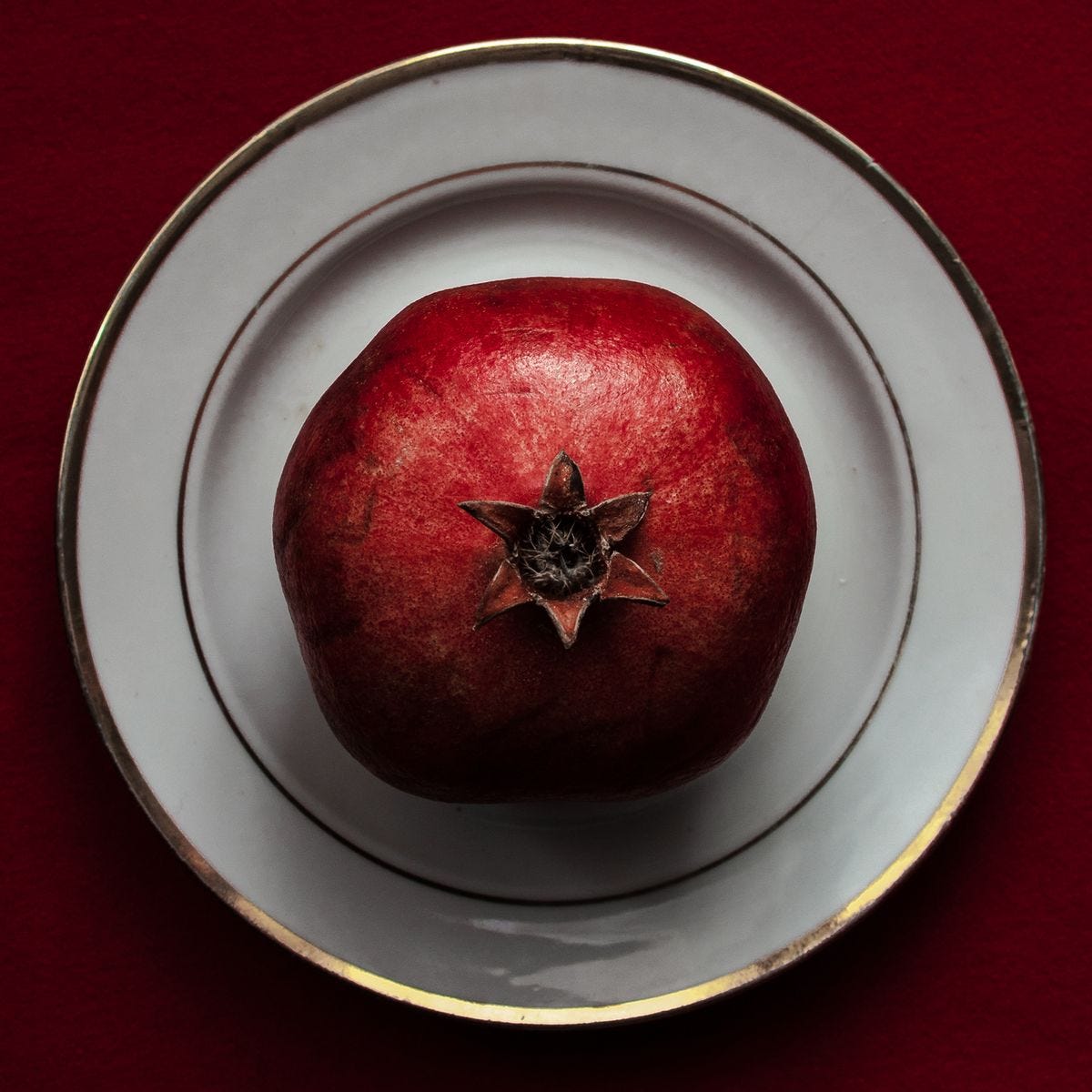
The pomegranate is the original crown. That spiky thing on top is the flower calyx. King Solomon’s crown was modeled on it. European royal crowns are inspired by that design. Biblical fruit. King of fruits. The pomegranate is royalty.
Every cultivated pomegranate on Earth descends from trees first domesticated by ancient Iranians 5,000 years ago. Incredible.
Persian weddings have featured pomegranates for thousands of years. They sit on the table as a wish for healthy children. On winter solstice, Persian families gather to eat pomegranates together to bless the coming year. Anar (pomegranate in Farsi) means “the food of paradise.”
The pomegranate is technically a berry. Botanists invented a whole new category just for it called a balausta. It is structurally closer to a guava than to an apple.
The pomegranate peel has more antioxidants than the arils. A majority of the good stuff lives in the white pith. There's probably science behind this but IMO this is why freshly pressed pom juice (where the whole fruit is crushed) always tastes better than juice that's only pressed from the arils.
The hand grenade is named after the pomegranate. French soldiers in the 1500s saw a small fragmenting bomb scattering shrapnel like pom arils and called it a grenade, the French word for pomegranate.
The fruit you buy is the ripest it will ever be. Pomegranates do not ripen after picking. This also means a sour pomegranate at home is sour forever (rip).
The vast majority of pomegranates sold in the US are a single cultivar called “Wonderful.” Every single one descends from cuttings of ONE tree imported from Florida to California in 1896. Genetically, you’ve been eating one tree your entire life.
Pomegranate trees can live for 200+ years. Some trees bearing fruit now were planted before electricity existed.
However, there are over 500 named cultivars worldwide. Persian and Afghan varieties are incredible. Some have inner seeds so soft you don’t even notice them. If you’ve only had Wonderful, you’ve sampled less than 1% of pomegranate’s potential.
Pomegranates are mentioned in nearly every major religious text on Earth. Fruit for paradise. Hard to find a more biblical fruit.
The pom flower is edible. And real grenadine syrup was originally just pomegranate juice and sugar, not the corn syrup and red dye you get today.
Pomegranate molasses is one of the most underrated ingredients in any kitchen. Drizzle on your Ray Peat carrot salad to take it up a notch.
The pomegranate is one of the few fruits that flowers and fruits simultaneously. You can see ripe fruit and fresh blossoms hanging on the same branch.
A perfectly ripe pomegranate makes a bright metallic tink. An unripe one gives you a thud. It should always feel heavy for its size and look slightly squared - not perfectly round.
To those who say pomegranates are too much work, it’s a beautiful ritual!! In a world where so many of us are constantly chasing that next dopamine hit, sometimes cracking a pomegranate open is all you need to slow down and reset (this is also a really great tutorial to seed them). You need to be analog maxxing.
Enjoy pomegranates on their own, with a bowl of yogurt and raw honey or, my favorite - sipping a glass of freshly pressed pomegranate juice on a rainy morning.
Never forget that you’re eating the SAME fruit kings were buried with.
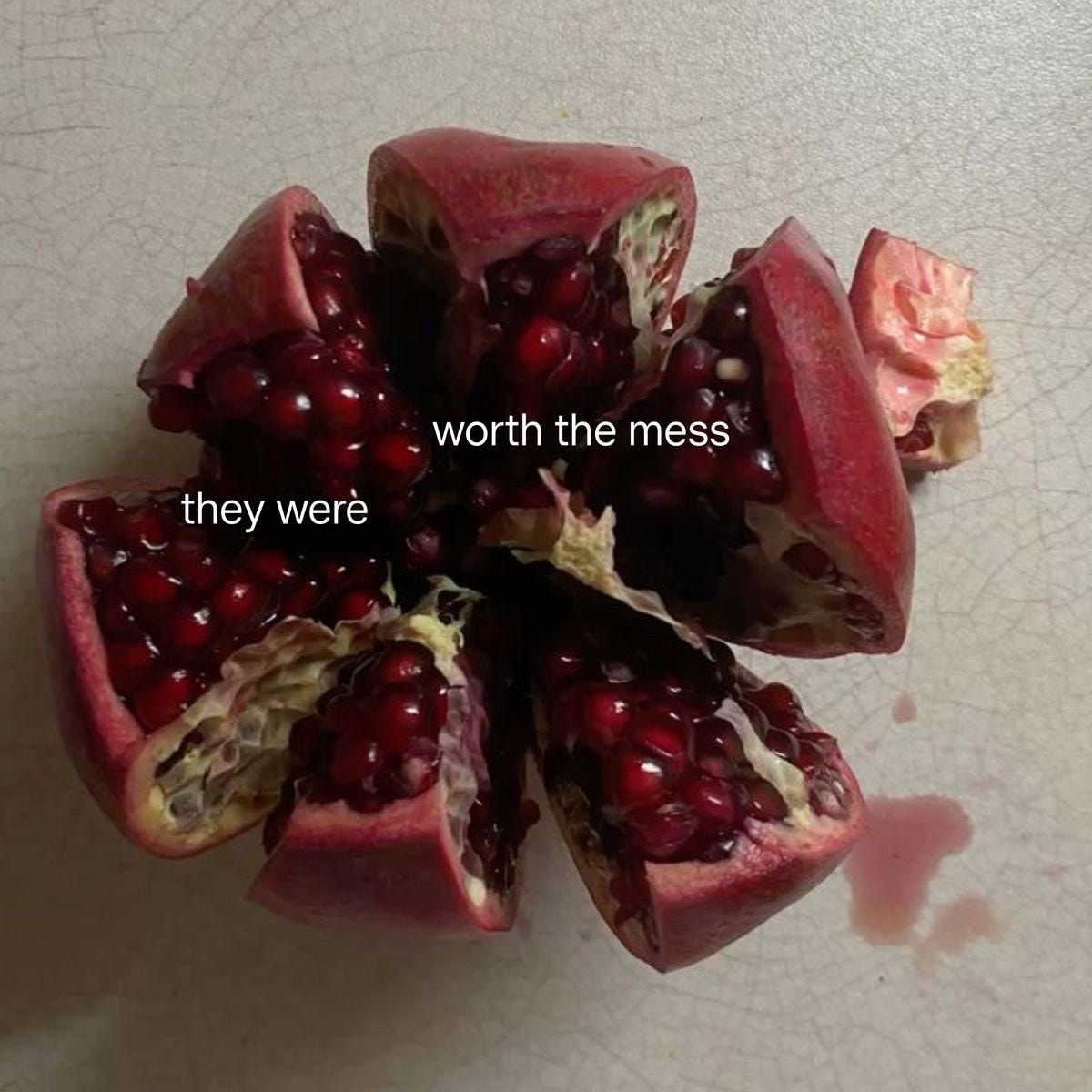
Any other fruit that requires this much mess to consume would’ve gone extinct. The reason pomegranate still exists is because of how beautiful it tastes and how amazing it is for our bodies. The fruit for fertility. Lesson in there.

Ice cream is a health food

It’s a (slightly melted) vanilla bean ice cream spring summer
World bee day

In honor of World Bee Day, here’s one of the best posts we made back in the day - sharing some facts about bees & honey you may not have known. Bees are friends. We must always thank the bees!! 🐝🫶
Antioxidant and hydration-rich foods

The most nourishing summer foods are often the most hydrating — and the compounds inside them are what make them so powerful.
Anthocyanins in berries help support cognitive health as we age. Acemannan in aloe vera supports skin hydration + collagen production. Citrulline in watermelon helps support circulation and recovery. Melatonin in tart cherries encourages deeper, more restorative sleep. Lycopene in tomatoes helps support the skin against oxidative stress from sun exposure.
These are the kinds of foods that nourish the body deeply — supporting radiant skin, energy, hydration + resilience from the inside out.

❋ Strawberrimisu by Caroline R.F. Williams

“The farmers markets have just started up again in Bend, Oregon, and among the stars of the spring produce are the Albion strawberries. Brought in by Marquam Hill Berries, a small, family-owned farm in the heart of Willamette Valley, Albion strawberries are known for being exceptionally sweet and juicy with low acidity. I find them so irresistible that I often buy a “spare” container to enjoy before the groceries make it home.
This recipe works with just about any fruit purée and can be adapted for any season. I’ve made versions of this with citrus (blood orange + Grand Marnier) and summer cherries (FE pie cherries + Cherry Herring) that have all been crowd pleasers! For the most “strawberry shortcake adjacent” version of this and in the interests of being maximally kid-friendly, I omitted any liqueur from my strawberry version.” — Caroline R.F. Williams
❋ Pistachio Cherry “Olives” by jess filippo

“In 2024, I went to a Brightland olive oil event where the goodie bag included a cookie that looked like an olive. I was immediately smitten (who wouldn’t be?) and determined to make my own version for my 2025 holiday cookie box. Enter this linzer-thumbprint hybrid that is just as delicious as it is chic.” — jess filippo

“We love keeping a compound butter in our fridge to add a little oomph to proteins and veggies when they need it. Case & point: we put this Tuscan butter on everything, from chicken to salmon to a simple slice of toasted sourdough. Our newest fave is this garlicky, herbaceous number. The striking butter not only adds color to the plate, but it’s got lots of assertive flavor to wake up even the blandest of meals. This butter is a no-brainer on top of your steak dinner, but that isn’t your only option: add it to your pasta, roasted potatoes, or grilled vegetables.
Once made, store it in the refrigerator, or freeze if you’re wanting to keep this butter on you for months. Choose one of your favorite red wines for this recipe—checkout our list of all the major types of red wines if you need some inspo.”
❋ Granita – Cool Off the Sicilian Way

“For Sicilians – and wishful future visitors like myself – summer is incomplete without the opportunity to enjoy the intense flavors and welcome coolness of a granita. Not an ice cream nor gelato; probably closest to a sorbet, a granita is typically fruit juice, water, and sugar, frozen and served with a grainy consistency – imagine a sophisticated slurpee.
The origins of granita date back thousands of years to ancient Mesopotamia, where servants were dispatched to travel long distances to fetch snow and ice for cooling royal drinks. Eventually the Romans brought the practice to Sicily. During the warmer months, Sicilians would buy snow from Mount Etna and the Nebrodi mountains from the nevaroli, men who collected it in winter and stored it in caves on the mountain to prevent it from melting. Packaged in jute bags and covered with straw, the snow was transported down the mountain aboard carts or mules, ready to cool thirsty town-dwellers. With the Arab conquest of Sicily, sugarcane and lemons were introduced to the island, and the locals began mixing in honey, as well as aromatic herbs and spices, together with the snow, creating sherbet.”
❋ Mint Chocolate Chunk Ice Cream by Ella Henry

“I was literally so excited when I found chocolate mint at the farmers market OH MY GOSH. I discovered it last year, it’s just a different variety of mint (I believe a mix between spearmint & peppermint) that has a rich chocolate scent. I couldn’t believe it when I first smelled & tasted it. Literally is like mint chocolate ice cream. It is just sooo fresh and creamy.
So, naturally, my favorite way to use it is to make mint chocolate chip (for me, chunk) ice cream. This is how I used the chocolate mint last year and it was just so good I didn’t want to reinvent the wheel. Once you use fresh mint vs extract or even flavoring in ice cream it is just life changing. It tastes how it’s supposed to—light, creamy, balanced and not overpowering. Fresh. It is so perfect with the vanilla & the chunks of chocolate. I think this just has to be my favorite ice cream flavor of all time.It tastes even better right now because it’s literally 90 degrees out. Eating this for breakfast lunch & dinner. Let’s get intoooo it….” — Ella Henry

“I love butter and I don’t think I will ever eliminate it from my diet but being Greek, olive oil is in our daily cooking, used when children are baptized and used in Greek-Orthodox funerals. It’s big thing for Greeks.
We used it in our daily cooking and when I saw my friend, Chef Manolis Papoutsakis make this olive oil spread, I knew this would be a hit!”
More links:
❋ White asparagus with Orange Hollandaise, parsley potatoes, dried orange zest
❋ A stem snobs guide to the thinnest stems
❋ Browned butter banana bread walnut and cashew butter
❋ Focaccuterie >>> Charcuterie
❋ Dover sole with a fennel, orange and chilli butter with a crispy shaved fennel salad
A bit of a delayed dispatch this time, hope you had a great Memorial Day weekend! Have an amazing rest of your week!
— Rocky
❋ All our digital issues are free to peruse. Explore our latest:


❋ Winter 25/26 Coffee Table Book (Print)
❋ Explore the full WARKITCHEN archive here.
❋ May’s Spotify playlist (suggestions always welcome!)
❋ Got an article or recipe in mind? We’d love to hear more! Please send your pitch to rocky@warkitchen.net.
Amazing fruits!