


Welcome to a beautiful June! Strawberries are everywhere. Ataulfo mangoes are at their absolute best. Cherries are sweet. Peaches have arrived. There’s a lot to enjoy this month!
As we’ve done the past few months, we organized June’s fruits by where they are in their season: Late (grab them now), Peak (they taste their BEST), and Early (just arriving). For each one, here are some tips on how you can choose the best tasting fruit and ways you can enjoy them.
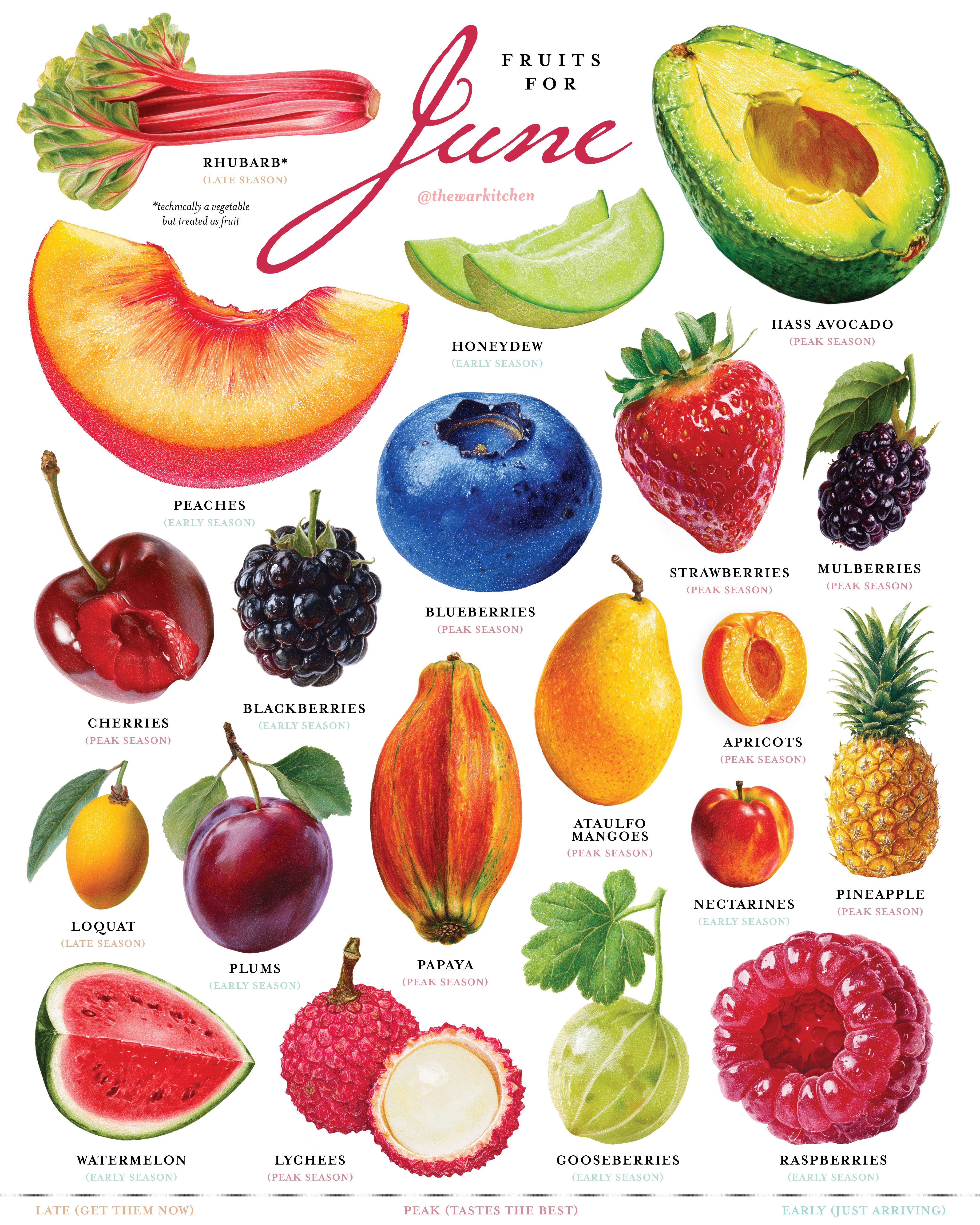
Late Season (Get Them Now)
Rhubarb
How to choose? Yes, rhubarb is technically a vegetable but it gets the honorary fruit treatment because it lives in the best pies and compotes hehe. Look for firm, crisp stalks with deep red or pink color! The deeper the color, the sweeter it will be. Avoid limp or browning stalks. This is genuinely your last good month for rhubarb!
How to use? Rhubarb and strawberries are the classic June pairing. Compote it for Basque cheesecake or simply simmer it down for homemade jam. If you’ve been waiting to make rhubarb anything this year, now is the time. Ella Henry has some really great rhubarb recipes in her May seasonal menu series.
Loquats
How to choose? Loquats are still around but on their way out! Look for plump, golden orange fruits with smooth skin and a slight give when you press them. Skip anything overly bruised or with brown spots. The best loquats are local!
How to use? Eat them out of hand, skin and all (the skin is thin enough to enjoy). If you’ve never had loquats, this is your last good window before next April! I’ve also really enjoyed chocolate-covered loquats.
Peak Season (Tastes the Best)
Strawberries
How to choose? Deep, uniform red all the way through. No white shoulders. They should smell like strawberries before you even get close to them!
How to use? Raw, obviously. Maybe with a little yogurt if you want a heavier snack. Add some raw honey, sprinkle some cacao nibs. Remember, if you’re making rhubarb anything this June, always add strawberries!!
Apricots
How to choose? June is California’s apricot peak. Look for uniform deep orange with a slight blush! They should be slightly soft and beautifully fragrant. Avoid anything that’s rock hard (those won’t ripen well).
How to use? A perfectly ripe apricot at room temperature is one of the great simple pleasures in life. If they’re still firm, halve them, pit them, roast at 400°F until they collapse and serve with raw honey or vanilla bean ice cream. If you find yourself with an abundance of apricots, you can always make great jam!
Cherries
How to choose? Look for plump, glossy cherries with bright green stems still attached. The stem is always the giveaway! Dry, brown, or missing stems mean the cherries have been sitting around. Skin should be a crimson red to a deep mahogany.
How to use? Cold, by the handful, while you watch Roland Garros hehe. You can also lightly roast them with a drizzle of extra virgin olive oil and serve over yogurt. Or make a clafoutis - the French dessert that’s somehow baked custard with cherries (recipe linked below).
Blueberries
How to choose? Always look for firm, plump blueberries with a uniform deep blue. It’s fine if they have slight “white bloom” on their skin. Always avoid packets that have blueberries leaking (or crushed) at the bottom.
How to use? Wash and eat by the handful. Prioritize organic if you can (blueberries are on the Dirty Dozen list). Throw them into everything: yogurt, pancakes, smoothies, sourdough. Blueberries are one of the most antioxidant-rich foods you can put in your body and June is when they’re at their best AND most affordable.
Mulberries
How to choose? Mulberries are rare! You can usually find them at farmers markets or niche Mediterranean grocers. Look for deeply colored, dark purple / red berries. They should feel slightly delicate in your hands but never crushed.
How to use? Eat them fresh! I always say they’re blackberry’s sweeter cousin. You can also use the opportunity to make an incredible jam that’s hard to find in a regular supermarket.
Lychees
How to choose? Look for bright red to pinkish-red shells with minimal browning. They should feel slightly soft when you squeeze them gently. Avoid anything that smells fermented.
How to use? Peel and eat! If you’ve never had a lychee I’d say it tastes like a chunkier grape with a larger seed. Lychees also make an incredible water cocktail with sparkling water, mint, and a squeeze of lime.
Ataulfo Mangoes
How to choose? Deep golden yellow. No green. They should feel soft but not mushy (similar to how a perfect avocado feels). Wrinkles on the skin are fine, but consume immediately if so!
How to use? Mexican Ataulfos (also called Honey Mangoes) are one of the sweetest mangoes you can buy. Eat them raw. Slice them into yogurt. Make mango sticky rice. Just don’t cook them, the texture is too perfect to mess with.
Hass Avocado
How to choose? For eating immediately, look for dark green to almost black skin with a slight give. For eating later in the week, buy firmer, greener ones and let them ripen on your counter.
How to use? Smashed on sourdough with sea salt and niche extra virgin olive oil. Sliced into a salad with a citrus dressing. June Hass avocados are at their peak in California right now, so they should be cheap and incredibly tasty!
Papaya
How to choose? Look for papayas turning from green to golden-yellow, with skin that’s slightly soft to the touch. A ripe papaya will have a very gentle, sweet fragrance. Avoid anything with sunken spots or sour smells.
How to use? Slice in half, scoop out the seeds, and squeeze fresh lime over the flesh (this elevates them, trust me). Also incredible in fruit salads or blended into a smoothie with banana and lime.
Pineapple
How to choose? A heavy pineapple is a good pineapple. Always more golden-yellow than green. Leaves should pull out with a gentle tug.
How to use? Eat fresh! You can char thick slices and serve with ice cream. Or do a pineapple-lime water cocktail and practice deep leisure.
Early Season (Just Arriving)
Peaches
How to choose? June peaches are the first wave from California. Look for a uniform golden color with a slight red blush. They should give slightly when pressed near the stem. Avoid green or really hard peaches. Always smell them too! If they smell like nothing, they’ll taste like nothing.
How to use? Eat them raw. Grill them. Bake into a peach cobbler. Slice over burrata with basil and good extra virgin olive oil. June peaches are good but July and August peaches will be better, so please pace yourself!
Nectarines
How to choose? Same as peaches but with smooth skin. Look for deep red-orange color with no green. A ripe nectarine smells obvious from a few feet away (I might be exaggerating here).
How to use? Same as peaches really. They’re interchangeable in almost every recipe! The lack of fuzz makes them slightly easier to grill and slice into salads.
Plums
How to choose? First California plums of the season are arriving. Look for firm fruit with a slight give and a bright “bloom” on the skin (that natural waxy coating). Black, red, or yellow depending on variety. Avoid anything with sunken or mushy spots.
How to use? Plums get sweeter and better as the summer progresses, so these early ones are best cooked! Roast them with cinnamon and honey. Bake them into a clafoutis (same recipe works). Or stew them down for a compote that goes beautifully with yogurt.
Raspberries
How to choose? Look for plump, dry (!!), brightly colored berries. They should be firm but not hard. Inspect the bottom of the container for crushed or moldy ones (mold spreads fast in raspberries).
How to use? Raw by the handful! Fold into full fat yogurt with raw honey. Raspberries are also incredible with dark chocolate.
Blackberries
How to choose? Plump, deeply colored! There shouldn’t be any red (those are unripe). They should feel slightly soft but not mushy. Smell them, ripe blackberries are incredible.
How to use? Eat them fresh! Bake into a crumble. Blackberries also pair really well with savory things, like roasted duck or a sharp blue cheese.
Gooseberries
How to choose? Gooseberries are hard to find unless you’re at a farmers market or specialty grocer! Look for firm berries with their distinctive translucent stripes still visible. Green ones are tart and great for cooking and the red / pink ones are sweeter and better for eating raw.
How to use? Make a classic English gooseberry fool (recipe linked below). Bake them into a tart with custard. Gooseberries are one of those forgotten fruits and June is the only time you can really get them.
Watermelon
How to choose? The best watermelons always feel heavy for their size. A creamy yellow spot on the bottom (where it sat on the ground while ripening) is a great sign! Tap it and it should sound hollow, almost like a drum. Avoid anything that sounds dull or feels light.
How to use? Cold! In wedges. On a hot day. Remember to eat the rind too. If you want to get creative, cube it and toss with feta, mint, and a squeeze of lime. Or blend with some lime juice for the most hydrating summer drink possible.
Honeydew
How to choose? Look for creamy yellowish white skin. It should feel heavy and the bottom should give slightly when pressed. A ripe honeydew has a subtle floral smell.
How to use? Eat it raw! Or you can wrap with thin prosciutto for an easy appetizer. Honeydew is just arriving so the truly great ones won’t hit until July.
On eating seasonally (not a rule, just a beautiful idea)
Here at the WARKITCHEN we talk about seasonal eating a lot. Our monthly fruit posts are some of your favorite and we can’t thank you enough for your support. But I just thought I’d leave you with some notes on seasonal eating. While it isn’t a rule, it’s always nice to eat seasonally when you can.
With how our global supply chain is now, there’s absolutely nothing wrong with having raspberries in November (you can, and nobody will stop you if you’re craving for it). Just know that they won’t taste as good as they are when they’re in season. And they probably cost more too!
I’ve found that when you commit to eating seasonally, fruit (and produce in general) becomes special. You look forward to when berries are in season and you get excited to try all these recipes you’ve been bookmarking all winter.
You’re also eating fruits that your body absolutely needs for that time of year! Vitamin C in citrus during deep winter. Watermelon and berries when you’re playing tennis in peak summer and need real hydration. Nature knows best.
A quick note for international friends
This list is built around the North American calendar (mostly California, Florida, and Mexico, which is where most US grocery store fruit comes from).
So if you’re in Australia or New Zealand, June is your winter! The calendar flips. Right now you’re getting peak citrus (mandarins, navel oranges, blood oranges, etc), apples and pears coming into their best storage months, persimmons, kiwifruit and it’s the start of avocado season for you.
If you’re in the tropics, you basically get to skip seasonality. Mangoes, papayas, pineapples, bananas are usually available year round. Though you do get some peaks of durian, lychees, longans during “summer months”.
If you’re in the UK or Europe, your calendar runs about 2-3 weeks behind North America (as a very simple rule of thumb)! This means strawberries are at peak (especially British Wimbledon strawberries) late June. Gooseberries, currants, cherries, and the first apricots are also arriving!
For everyone else, the rough rule is that if you’re in the Northern Hemisphere, this list applies with minor shifts! Southern Hemisphere, flip everything six months.
What are you excited for this June?

Foods for healthier blood

Your blood is FLUID tissue that touches every system in your body. Your energy. Focus. Mood. Recovery. It all depends on the quality of your blood. There's a reason the elites are injecting themselves with young blood but that's a topic for another day...
What you should know is that you can IMPROVE the quality of your blood by eating the right foods. Snack on pomegranate to fight arterial plaque and improve blood circulation. Eat bone marrow (like supports like) to rebuild blood and improve oxygen transport. Always eat your eggs to fight anemia (eggs good). Spread liver pâté on sourdough to restore your energy. Have pickled beets to improve blood circulation. These are foods for healthier blood.
We need to go back to warm lighting

If you want to change how your room feels, change your lighting. Replace your single bright light source for a number of smaller warm lamps. Complete mood flip. Circadian friendly. The body just knows.

❋ 11 Grilling Mistakes That Are Ruining Your Cookout by andrew gruel

“As grilling season kicks into full gear, millions of Americans will dust off their grills, throw on some burgers, and make the same mistakes they’ve been making for years.
The funny thing is, most grilling disasters aren’t caused by bad ingredients but instead by bad habits.
After decades as a chef, restaurateur, and guy who will find just about any excuse to cook over live fire, I’ve learned that great grilling isn’t about expensive equipment or fancy techniques. Great grilling is about avoiding a handful of common mistakes.
If you can fix these 11 things, you’ll immediately cook better food this summer.” — andrew gruel
❋ Classic French Cherry Clafoutis

“Clafoutis (pronounced kla-foo-tee) is one of those funny French words that makes a dish sound so fancy, while it’s actually so simple to make. Some fresh seasonal cherries and a few basic baking ingredients (flour, sugar, eggs and milk) is all you need to create this utterly delicious dessert in your own kitchen.
So if you’ve never tried to make a Cherry Clafoutis at home before, stay with me – you’ll be amazed how easy it is to prepare it!”
❋ How to Lower LDL Cholesterol Naturally by Kaya [Paid Post]

“Cholesterol is an essential-to-life fatty compound. Most of it is made in the body, by the liver, but some is also found in animal foods, like eggs and meat. Cholesterol is the “raw material” used to make all hormones and synthesize vitamin D. It is used to make bile and thus helps with the absorption of fat-soluble vitamins and the elimination of fat-soluble toxins, like environmental estrogens. It is also a structural “building block,” used to make cell membranes and other cellular components.1
Between 70-80% of all cholesterol in circulation is made in the body rather than absorbed from the foods you eat.23 Yes, you read that right. Most of the cholesterol in your body doesn’t come from dietary cholesterol!” — Kaya
❋ Pistachio Latte Sandwich Cookies

“The main star ingredient in these cookies is pistachio and we're using it two ways in the cookie: ground pistachios in the shortbread dough and pistachio cream for the centres. After the pistachio cookies have been stamped and baked, we're piping a ring of coffee cheesecake cream and filling the centres with a big dollop of the pistachio cream.”
❋ Strawberry & Pomegranate Jam by Sophie Bamford

“We’re starting off with a nice, simple jam. I love strawberries but plain strawberry jam can be a little boring, I find myself wanting something extra to give it a little oomph. Often I use citric acid in my jams to add a bit of freshness but for this jam we’re using pomegranate molasses. Pomegranate molasses is just a really strong reduction of pomegranate juice, this is perfect because it saves us messing around with fresh pomegranate and it adds some much needed acidity and an almost savoury note.
I’m also using a sprig of fresh mint in this jam, the aim of this isn’t to make the jam taste MINTY, it’s just to season it and add another layer of flavour.” — Sophie Bamford
❋ How to make gooseberry fool, the quintessential taste of English summer

“Lots of different things piled on a plate just makes a mess and having too many ingredients or garnishes is an opportunity for accidents and attracting wasps. Logistics aside, the first fruits of summer – whether it is peas or gooseberries, melons or tomatoes – should sing clear and sweet. And they need not be messed about with.
This is the quintessential taste of English summer. I like mine quite tart, but you can add sugar to suit your own taste. The rice is there to give the purée a bit of body, so the fool is not too runny. This is best made the day before.”
More links:
❋ Vanilla Ice Cream with Olive Oil and Dates
Have an amazing rest of your week!
— Rocky
❋ All our digital issues are free to peruse. Explore our latest:


❋ Winter 25/26 Coffee Table Book (Print)
❋ Explore the full WARKITCHEN archive here.
❋ Got an article or recipe in mind? We’d love to hear more! Please send your pitch to rocky@warkitchen.net.
Feeling like buying cherries BADLY so that I can try clafoutis asap
YAYYYY!!!